

Which Metal Roof Adds More to Your Home Value? Standing Seam vs. Exposed Fasteners
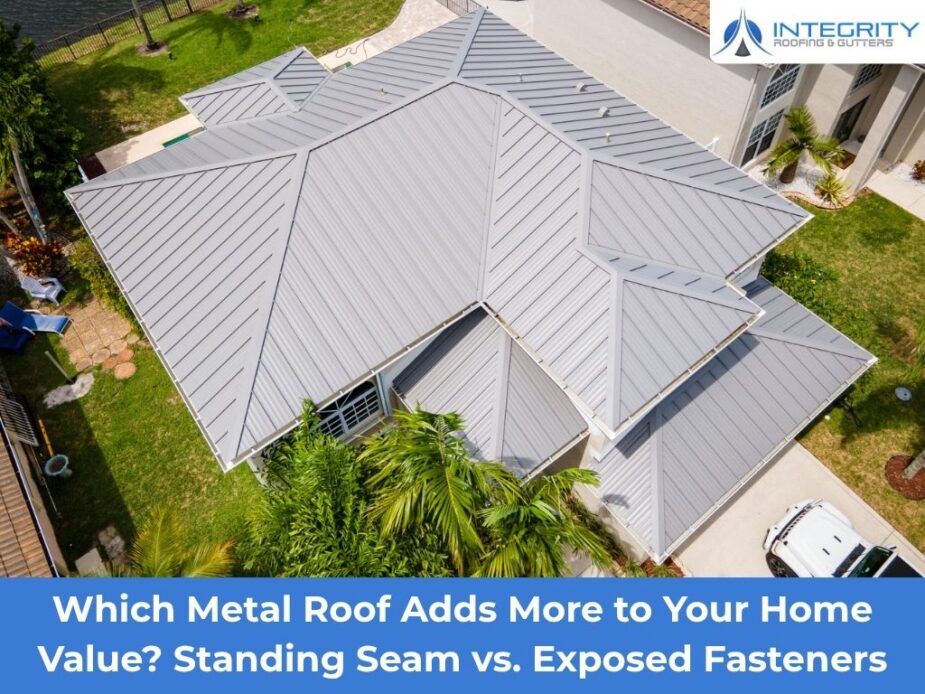
Why Does a Metal Roof Standing Seam System Add More Value, and How Can You Tell if It Is Worth the Extra Investment?
If you are comparing standing seam to exposed fastener metal roofing, you probably want more than a nicer look – you need confidence that your roof will hold up, resist leaks, and protect your home for decades without constant upkeep.
That is exactly where Integrity Roofing can help. A metal roof standing seam system is often the stronger long-term choice because its concealed fasteners, cleaner profile, and better weather resistance can support both durability and curb appeal. If you want to make a smart roofing decision before costs rise or problems spread, start by getting expert guidance on which system fits your home best.
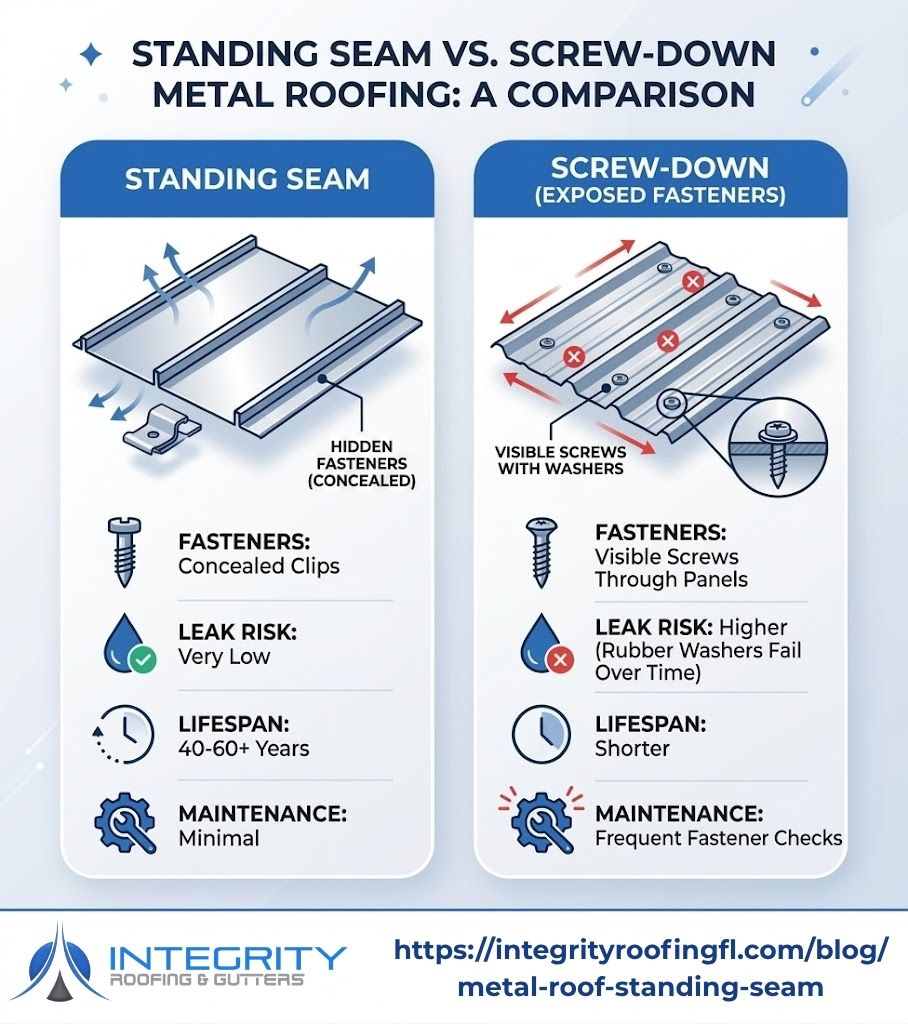
| Feature | Standing Seam | Exposed Fastener |
|---|---|---|
| Fasteners | Hidden (concealed) | Visible screws through panels |
| Leak risk | Very low | Higher (rubber washers fail over time) |
| Lifespan | 40-60+ years | Shorter (lighter gauge, more wear points) |
| Thermal movement | Handled by floating clips | Can cause fastener loosening |
| Aesthetics | Sleek, modern | More utilitarian |
| Installation | Labor-intensive, specialized | Faster, simpler |
| Maintenance | Minimal | More frequent fastener checks |
Here’s the honest truth most roofing companies won’t tell you upfront:
Not all metal roofs are built the same. The difference between a standing seam system and a standard screw-down (exposed fastener) roof isn’t just cosmetic — it’s structural, and it matters a lot in a state like Florida where heat, humidity, and hurricanes put every roof to the test.
Exposed fastener roofs use roughly 70 screws per square of roofing. On an average home, that’s 2,500 to 3,000 screws punching through the metal surface — each one a potential leak point as rubber washers age and panels expand and contract with the heat. Standing seam systems solve this by hiding all fasteners beneath interlocking panel seams, letting the roof breathe and move without compromising its weather barrier.
The trade-off? Standing seam costs more and takes longer to install. Whether that investment makes sense for your home or building is exactly what this guide breaks down.
I’m James Thomson, founder of Integrity Roofing & Gutters, and over my 25+ years installing and evaluating roofing systems across Florida, I’ve seen how the choice between a metal roof standing seam and an exposed fastener system plays out over decades — and I’ll give you the unfiltered comparison you need to make the right call.
The Anatomy and Performance of a Metal Roof Standing Seam System
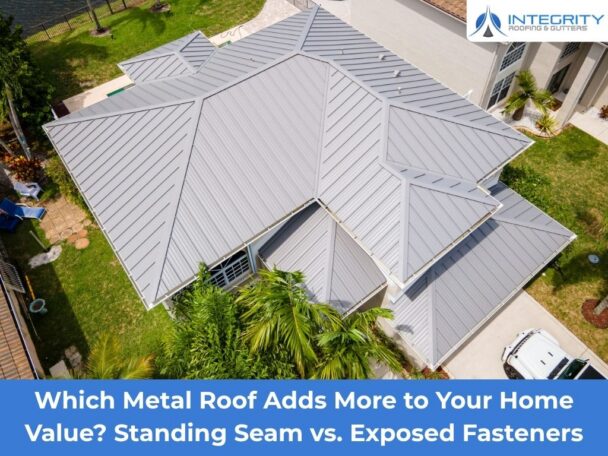
To understand why a metal roof standing seam is considered the “gold standard,” we have to look at how it’s built. Unlike traditional corrugated metal that you might see on a barn, standing seam consists of wide, flat metal panels with vertical legs on either side. These legs lock together, creating a raised “seam” that stands above the flat surface of the roof.
The magic happens underneath. These panels are secured to the roof deck using specialized clips and fasteners that are completely covered by the next overlapping panel. Because the fasteners aren’t poking through the metal and exposed to the Florida sun, they don’t have rubber washers that can crack, rot, or back out over time.
In the industry, we categorize these systems by how they handle water:
- Hydrokinetic Design: These are “water-shedding” systems, typically requiring a steeper roof pitch (usually 3:12 or greater). They rely on gravity to move water off the roof.
- Hydrostatic Performance: These are “watertight” systems used on very low-slope roofs. They use mechanical seaming and internal sealants to ensure that even if water “stands” on the seam during a heavy tropical downpour, it cannot penetrate the joint.
A challenge for any Florida roof is thermal movement. Metal expands when it gets hot and shrinks when it cools. In a screw-down roof, this expansion puts immense pressure on the screw holes, eventually “wallowing” them out and causing leaks. A metal roof standing seam uses sliding clips that allow the panels to glide back and forth as temperatures change without putting any stress on the fasteners.
To protect the metal from our salty, humid air, high-quality systems use PVDF finishes, commonly known by the brand name Kynar 500. These coatings are engineered to resist fading and chalking for decades. Furthermore, these systems are designed to meet strict scientific research on wind actions and building cladding, ensuring they stay attached even when hurricane-force winds try to lift them off.
Key Profiles of Metal Roof Standing Seam Panels
Choosing the right profile is about balancing aesthetics, budget, and the specific pitch of your roof. Here are the most common types we install:
- Snap-Lock: The most popular residential choice. The panels simply “snap” together over the clips. It’s a great balance of performance and ease of installation.
- Mechanical Seam: These panels are physically folded together using a specialized tool called a roof seamer. This creates an incredibly strong, airtight bond ideal for low-slope roofs or high-wind areas.
- Nail Flange (Fastener Flange): Similar to vinyl siding, these have a perforated strip on one side where screws go. While more affordable, they don’t allow for as much thermal movement as clipped systems.
- Symmetrical T-Panels: A modern innovation where both sides of the panel are identical, joined by a separate cap. This allows us to replace a single damaged panel in the middle of the roof without tearing up the whole section.
- Batten Panels: These use a wider decorative cap over the seam, offering a bold, traditional look often seen on historic or high-end architectural homes.
If you are unsure which profile fits your home’s architecture, you can find more info about choosing the right roofing material on our blog.
Material Options and Dimensions for Standing Seam
The material you choose dictates how long your roof will last. In Central Florida, we primarily work with:
- Galvalume Steel: Steel coated with an aluminum-zinc alloy. It is incredibly durable and can last up to 100 years if properly maintained.
- Aluminum: The “must-have” for coastal properties in places like New Smyrna Beach or Jacksonville Beach. Aluminum doesn’t rust, making it impervious to salt spray.
- Copper & Zinc: These are “legacy” materials. They develop a beautiful patina over time and can last centuries, though they come with a premium price tag.
Standard panels are usually 24-gauge (thicker and stronger) or 26-gauge. Most homeowners opt for 16-inch wide panels, though they can range from 12 to 18 inches. One of the coolest parts of our process is on-site rollforming. We can bring a machine to your driveway and roll out a single, continuous metal panel that stretches from the ridge to the eave—even if your roof is 50 feet long! This eliminates horizontal laps, which are common leak points in other roofing types.
Performance Standards and Environmental Suitability
Florida has some of the toughest building codes in the country, and for good reason. A metal roof standing seam is built to exceed these standards:
- Wind Uplift (UL 580): These systems often carry a Class 90 rating, meaning they can withstand the massive suction forces created by high winds.
- Fire Resistance: Metal is non-combustible, typically earning a Class A fire rating.
- Impact Resistance (UL 2218): Most standing seam roofs are Class 4 rated, the highest possible rating for hail and debris impact.
In our local environment, thermal expansion is a daily occurrence. By using sliding clips and ensuring proper “clip relief” (small notches that allow the metal to move), we ensure the roof stays quiet and watertight for its entire lifespan.
Weighing the Investment: Cost, Installation, and Longevity
We won’t sugarcoat it: standing seam is an investment. The labor intensity is significantly higher than a screw-down roof. Our crews use specialized tools to hem edges, seam joints, and ensure every flashing detail is perfect. However, when you look at the “life-cycle value,” the math starts to make sense.
If you’re weighing a metal roof standing seam against lower-cost options, that’s the real concern: upfront price versus long-term value.
In Florida, where heat, rain, and wind all put roofing systems to the test, you need to look beyond installation cost and focus on lifespan, leak resistance, and energy savings.
A standing seam system is built with concealed fasteners and durable finishes designed for long service life, and it can also reflect more solar heat than many traditional roofing materials. If you want a roof that supports curb appeal, lowers maintenance risk, and may add more lasting value to your home, start by getting expert guidance on whether standing seam is the right fit.
If you want to learn about roofs and their characteristics, visit our blog. Or if you still have any questions, visit our FAQs.
Why Standing Seam Outlasts Exposed Fastener Roofs
The primary reason standing seam wins on longevity is the concealed fastener design. In an exposed fastener system, you have thousands of holes. Even with the best Kynar paint, those screw holes are vulnerable. Over 40-60 years, those screws will inevitably need to be replaced, and the holes may need to be oversized.
With standing seam, the 24-gauge Galvalume and 35-year Kynar warranties provide a level of protection that lighter 29-gauge screw-down panels simply can’t match. If you’re seeing granules in your gutters or leaks after a storm, it might be time for a roof replacement.
Installation Complexity and Maintenance of a Metal Roof Standing Seam
Installation isn’t just about snapping panels together. We have to consider the minimum slope. Most snap-lock systems require a 3:12 pitch, but for flatter roofs, we can use mechanical seams that work down to a 1/2:12 or even 1/4:12 pitch.
We also specialize in retrofit systems. In many cases, we can install a new metal roof directly over your existing shingles using a “metal-over-shingle” recover system. This saves you the mess and cost of a tear-off while adding an extra layer of insulation to your home.
Maintenance is simple but necessary:
- Debris Cleaning: Keep valleys and gutters clear of leaves to prevent moisture traps.
- Sealant Inspection: While the panels last forever, the sealants around vent pipes may need a touch-up every 15-20 years.
- Scratch Touch-ups: If a branch falls, a quick dab of matching touch-up paint prevents any surface corrosion.
Advanced Features: Aesthetics and Accessories of a Metal Roof Standing Seam
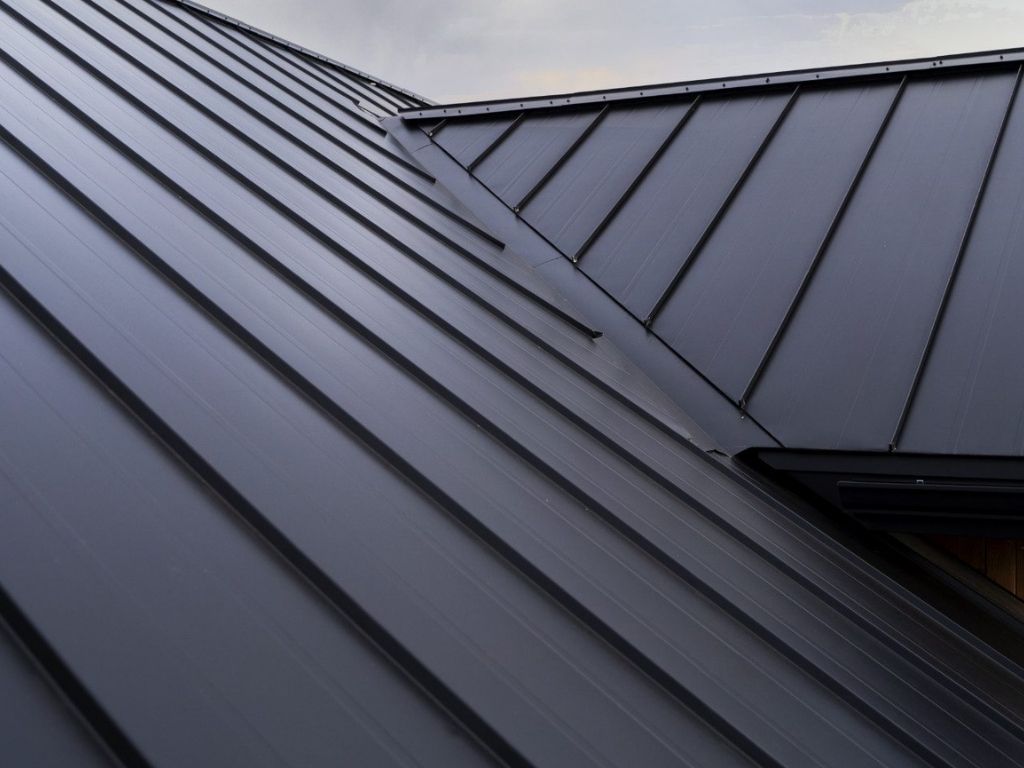
One common concern with wide metal panels is “oil canning”—a slight waviness that can appear in the flat areas of the panel. This is a natural characteristic of metal, but we can minimize it by using striations or stiffening ribs. These are small patterns rolled into the metal that give it more structural rigidity and break up light reflections, making the roof look perfectly flat.
One of the best “hidden” benefits of standing seam is how it handles accessories. Because the seams are raised, we can use non-penetrating clamps (like those from S-5!) to mount solar panels, satellite dishes, or snow retention systems.
At Integrity Roofing, we bring our commitment to honesty and quality workmanship to every project across Central Florida—from the coastal winds of Volusia County to the inland heat of Orange and Lake Counties. Whether you are in Orlando, Jacksonville, or anywhere in between, we are here to ensure your home is protected by a roof that’s built to last.
If you’re comparing roofing systems and want to know whether a metal roof standing seam will add more value to your home, now is a great time to talk with the team at Integrity Roofing.
You can request a professional estimate for Orlando roof repair and replacement today for clear guidance, honest pricing, and expert help choosing the right metal roof for your home and long-term goals.


Get Started With Your Roofing Project Today!

Ready to experience the difference that integrity makes? Contact us today for a free, no-obligation estimate. Let’s build a secure future for your home, together.