

Boost Your Home Value: Why a New Roof is the Ultimate ROI Project

Why Residential Roof Replacement Is One of the Most Important Home Investments You’ll Make
Your roof does more than keep rain out. It protects your home’s structure, controls moisture, and plays a major role in energy efficiency. When it starts to fail, the damage can spread fast — from attic leaks to mold to compromised framing.
The good news? A full replacement doesn’t just fix the problem. It rebuilds your home’s first line of defense from the ground up, with better materials and updated components that can last decades.
Residential Roof Replacement is the process of removing your existing roof down to the deck and installing a completely new roofing system — including underlayment, flashing, and shingles or other materials.
Quick insights for Florida homeowners:
- When to replace: Roof is 20+ years old, shingles are curling or missing, you see sagging, or repairs are becoming frequent
- Top materials: Asphalt shingles (most affordable), metal (longest-lasting), tile (best for Florida style and durability)
- Typical timeline: Most replacements take 1–3 days on-site
- Does insurance cover it? Yes, if damage is from a covered event like wind or hail — not normal wear and tear
- DIY or pro? Always hire a licensed professional
Most homeowners only replace their roof once or twice in a lifetime. That makes choosing the right contractor — and the right materials — one of the most important decisions you’ll make as a homeowner.
I’m James Thomson, founder of Integrity Roofing & Gutters, Inc., with over 25 years of hands-on experience in residential roof replacement across Orlando, Jacksonville, and Central Florida. In this guide, I’ve brought together expert insights to help you evaluate your options clearly and confidently — so you can make the best decision for your home and budget.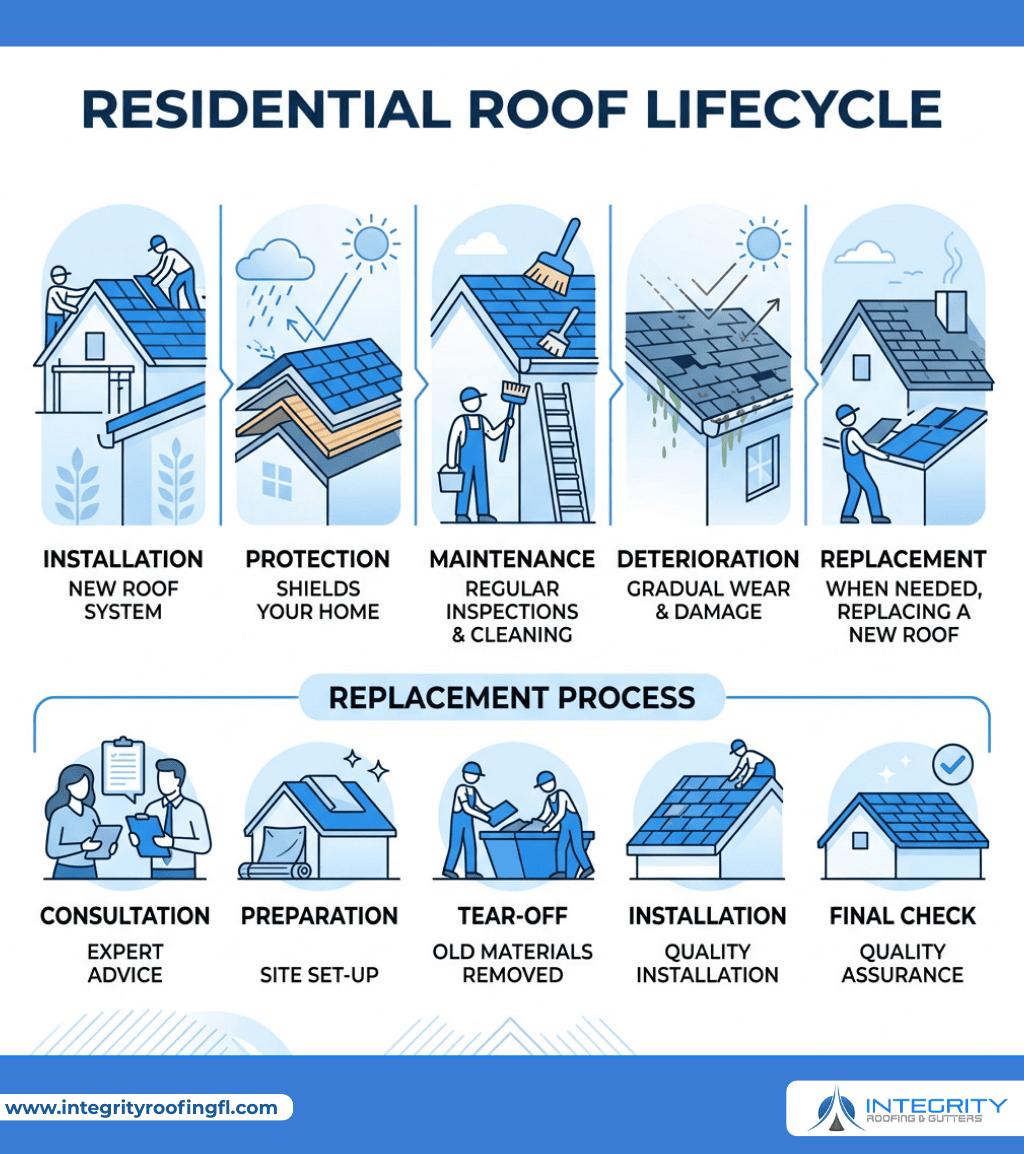
Key Indicators and Costs of Residential Roof Replacement
Knowing when to pull the trigger on a full Residential Roof Replacement can feel like a guessing game. Is that one leak a sign of a total collapse, or just a loose shingle? Think of your roof like a helmet for your home. Over time, even the sturdiest helmet gets cracks or dents. In Florida, our “helmets” deal with intense sun, tropical downpours, and hurricane-force winds that accelerate aging.
The most obvious sign is age. Most asphalt shingle roofs reach the end of their useful life between 20 and 25 years. If your neighbors are all getting new roofs, it’s a good hint that yours might be next on the list. Beyond the calendar, look for these physical red flags:
- Shingle Condition: Are they curling at the edges or “balding”? Granule loss is a major indicator. If you see what looks like dark sand in your gutters, your shingles are losing their protective coating.
- Vegetation and Moss: While a “green roof” sounds eco-friendly, moss, algae, and lichen are actually enemies. They trap moisture against the surface, which can rot the structure underneath.
- Attic Clues: Grab a flashlight and head upstairs. If you see shafts of daylight peeking through the boards or water stains on the rafters, your roof has already been breached.
- Sagging: This is the “code red” of roofing. A sagging roofline often suggests structural damage or rotted decking that needs immediate professional attention.
Differentiating Between Roof Repair and Residential Roof Replacement
We often get asked: “Can’t you just patch it?” It’s a fair question. At Integrity Roofing, we believe in transparency, and sometimes a repair is exactly what you need. However, there is a “tipping point” where repairing becomes a waste of money.
A good rule of thumb is the 30% threshold. If more than one-third of your roof surface is damaged, or if you are facing recurring leaks in multiple areas, a full replacement is usually the more cost-effective long-term move.
Repairs are great for isolated incidents—like a tree branch poking a hole or a few shingles blowing off in a localized wind gust. But if the underlying materials are brittle and old, “fixing” one spot often causes the surrounding shingles to crack. If you’re in the Orlando area and aren’t sure which path to take, we recommend checking out roof repair services to see if a quick fix is still an option for you.
Understanding Material Options and Lifespans
Choosing a new roof is a bit like choosing the right shoes for the season—function matters just as much as fashion. In Central Florida, we have to account for high humidity and heat. Your choice of material will dictate how long the roof lasts and how much you save on cooling bills.
- Asphalt Shingles: These are the most popular choice for a reason. Standard three-tab shingles typically last about 20 years, while architectural (laminated) shingles are thicker, more durable, and can last 25 to 30 years.
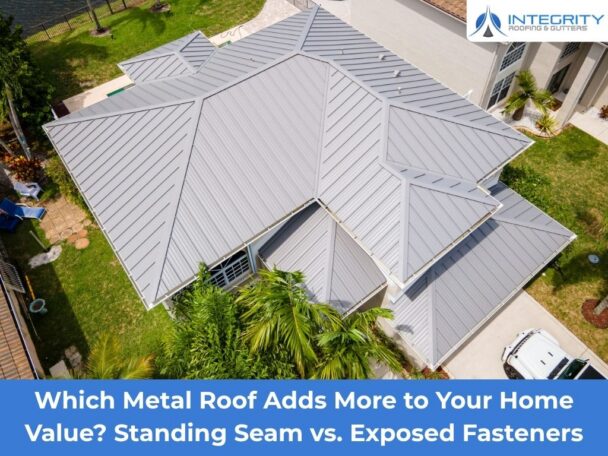
- Metal Roofing: A rising star in Florida, metal roofs are incredibly tough. They can last 40 to 70 years and are excellent at reflecting solar heat.
- Tile Roofing: Whether clay or concrete, tiles are a staple of Florida architecture. They are heavy and require a strong structure, but they can easily last 50 years or more with proper care.
- Slate: The “forever” roof. Slate can last over a century, though it is the most significant investment upfront.
When choosing the right roofing material, we always tell our clients to look at the “cool roof” options. According to Energy Star’s research on cool roof energy efficiency, shingles that reflect more sunlight can reduce attic temperatures significantly. In places like Altamonte Springs or Kissimmee, where the sun is relentless, this can lead to lower monthly energy bills.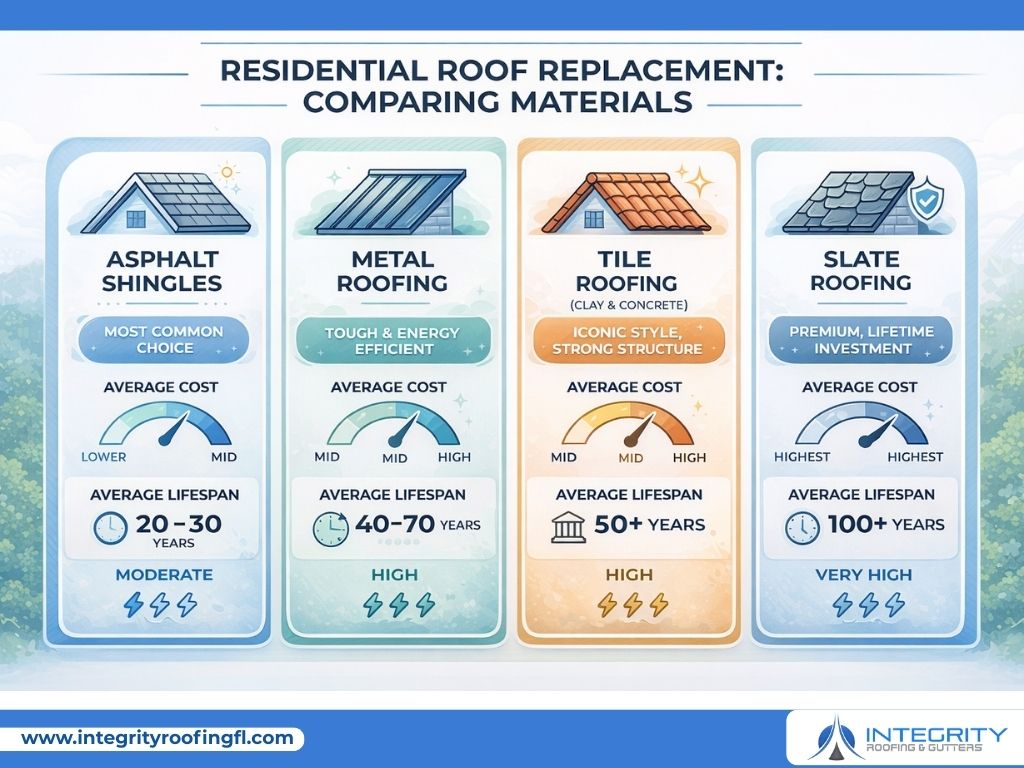
Financial Factors and Insurance Coverage
We know that a Residential Roof Replacement is one of the biggest checks you’ll ever write for your home. The total cost isn’t just about the shingles; it’s a combination of several moving parts:
- Roof Size and Pitch: More square footage means more materials. A steeper roof requires more safety equipment and takes longer to install, which increases labor costs.
- Labor: Roughly 60% of a roofing budget goes toward the skilled professionals doing the heavy lifting.
- Decking Condition: We won’t know the full story until the old roof comes off. If the wood underneath (the deck) is rotted, it must be replaced to ensure the new roof has a solid foundation.
- Permits and Codes: Florida has some of the strictest building codes in the country, especially regarding wind resistance.
Many homeowners wonder: “Will my insurance pay for this?” The answer depends on the why. Your homeowners insurance policy coverage typically covers “covered perils.” This includes sudden damage from hurricanes, heavy winds, or hail. It generally does not cover a roof that has simply reached the end of its life due to old age or lack of maintenance.
If you’ve recently experienced a storm in Jacksonville or Orlando, it is vital to have a professional inspection before filing a claim. We can help document the damage to ensure your carrier has all the information they need.
Maximizing Value Through Professional Installation and Warranties
A new roof is only as good as the hands that install it. You could buy the most expensive shingles in the world, but if they aren’t nailed down correctly or the flashing is off, you’ll have leaks within a year. Professional installation ensures that your roof functions as a complete system, not just a pile of shingles.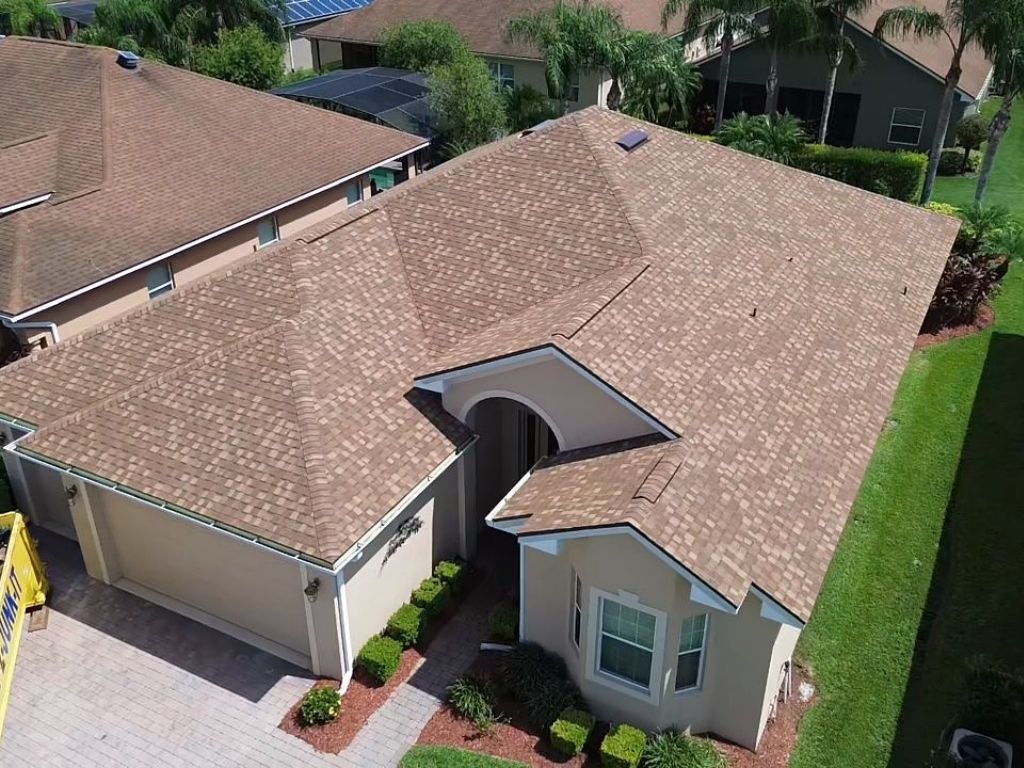
The Step-by-Step Residential Roof Replacement Process
We like to think of a roof replacement as a high-stakes relay race. Each stage must hand off perfectly to the next to ensure a watertight finish. Here is what you can expect when our crews arrive at your home:
- Property Protection: We start by protecting your landscaping, deck, and driveway. We often use boards to protect your driveway from the weight of the dumpster.
- Tear-Off: We remove all old roofing materials down to the wooden deck. While some codes allow for “overlays” (putting new shingles over old ones), we never recommend it in Florida. It traps heat and prevents us from seeing hidden rot.
- Deck Inspection and Repair: Once the deck is bare, we check for soft spots or rot. Replacing these boards now is much cheaper than doing it later.
- Drip Edge Installation: This metal flashing goes along the edges of your roof to direct water away from the fascia and into the gutters.
- Ice and Water Shield: We install a waterproof membrane in high-risk areas like valleys and around chimneys.
- Underlayment: A protective felt or synthetic layer is applied over the entire deck to provide a secondary barrier against moisture.
- New Roofing Material: This is the exciting part! We install your chosen shingles, metal, or tile using manufacturer-approved patterns and fasteners.
- Flashing and Vents: We seal the areas where the roof meets walls or pipes and install ridge vents to ensure your attic can breathe.
- Final Cleanup: We use magnetic sweepers to pick up every stray nail and ensure your yard looks better than when we arrived.
- Final Inspection: A thorough walkthrough ensures every detail meets our high standards.
Comparing Manufacturer and Workmanship Warranties
Warranties are your safety net, but they can be confusing. There are generally two types you need to know about. You can find more details on our FAQs page.
- Manufacturer Warranty: This covers defects in the materials themselves. For example, if your 30-year shingles start falling apart after five years due to a factory error, the manufacturer covers the replacement.
- Workmanship Warranty: This is provided by us, the contractor. It covers the actual installation. If a leak occurs because a nail was placed incorrectly, the workmanship warranty covers the repair.
In Florida, we also pay close attention to wind warranties. Many modern architectural shingles are rated for winds up to 130 mph, which is essential for our hurricane season. Additionally, this resource on cool roof ratings can help you identify products that maintain their energy-saving properties over time, which is often a requirement for certain eco-friendly certifications.
Selecting the Right Expert for Your Florida Home
At Integrity Roofing, we don’t just work in Florida; we live here. We understand that a roof in Winter Park or Clermont faces different challenges than one in a coastal area like New Smyrna Beach or Atlantic Beach. Our commitment to honesty, integrity, and transparency means we will never sell you a replacement you don’t need.
We encourage all homeowners to get multiple estimates. We are confident in our quality workmanship and our ability to explain the “why” behind every recommendation. Whether you are looking for roof replacement services or you are ready to request a roof replacement estimate, we are here to guide you.
Our service area spans across Central Florida, from the bustling streets of Orlando and the historic neighborhoods of Jacksonville to the growing communities in Lake County and Volusia County. We’ve handled projects in:
- Orange County: Orlando, Winter Park, Apopka, and Windermere.
- Duval County: Jacksonville, Atlantic Beach, and Neptune Beach.
- Seminole County: Sanford, Lake Mary, and Oviedo.
- Volusia County: Daytona Beach, DeLand, and New Smyrna Beach.
- And beyond: Serving St. Lucie, Martin, and Broward counties with the same dedication to quality.
Final Pro-Tips for Homeowners:
- Prepare the Interior: The vibration of a roof replacement can sometimes shake items off walls. It’s a good idea to take down fragile pictures or mirrors before work begins.
- Clear the Driveway: We’ll need space for our trucks and the dumpster. Moving your cars to the street ensures they stay safe from falling debris.
- Think About Pets: The noise can be stressful for dogs and cats. Consider a “daycation” for your furry friends while the heavy work is being done.
A Residential Roof Replacement is a major milestone in homeownership. By choosing the right materials, understanding the process, and partnering with a contractor who values integrity, you can ensure your home stays protected for decades to come. If you have any questions or are ready to see what a new roof can do for your home’s value and safety, reach out to us today or request an estimate online. We’re ready to help you build a better roof.
Get Started With Your Roofing Project Today!

Ready to experience the difference that integrity makes? Contact us today for a free, no-obligation estimate. Let’s build a secure future for your home, together.