

The Full Scope of Work for Your Next Residential Roof Project

Is a Tile Roof Replacement Right for Your Florida Home?
Tile roofs are one of the most durable roofing systems available. They resist fire, withstand high winds, and their thermal mass helps keep Florida homes cooler — reducing the load on your AC. But even the toughest tile roof eventually needs a full replacement, especially when the underlayment beneath those intact-looking tiles quietly fails after two decades.
If your home’s tile roof is getting older, leaking, or showing visible wear, this guide will help you understand the full process ahead – from selecting the right replacement materials to knowing what to expect on your property during the project.
I’m James Thomson, founder of Integrity Roofing & Gutters, Inc., with over 25 years of hands-on experience in residential tile roof replacement across Florida’s most demanding markets, including Orlando, Port St. Lucie, Jacksonville, and Central Florida. I’ll walk you through the full scope of a tile roof project so you can make a confident, informed decision.
What a Residential Tile Roof Replacement Includes
In simple terms, a residential tile roof replacement means removing the old tile roof system, including worn tiles, underlayment, and flashing, and installing a new one to restore dependable weather protection, energy efficiency, and curb appeal.
Here’s a quick overview of what the process involves:
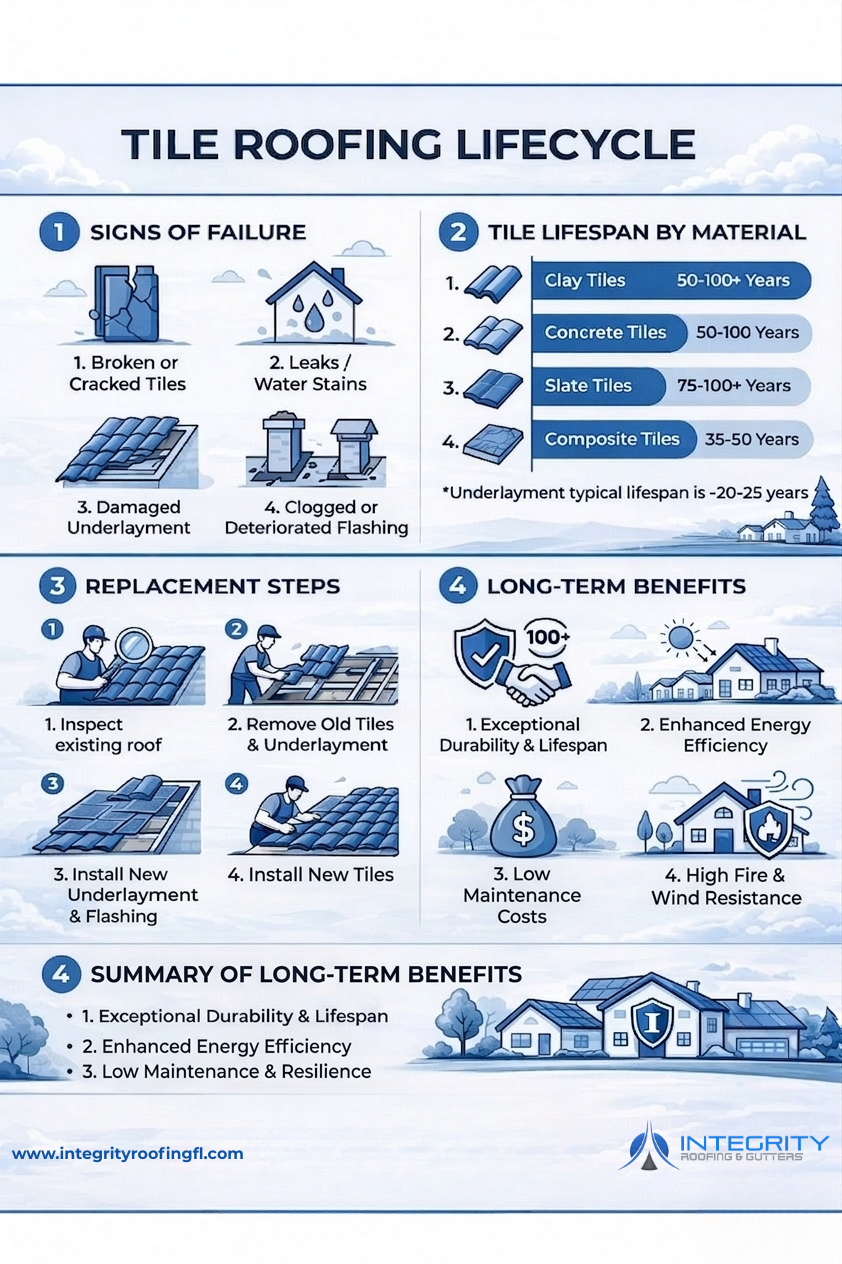
- Inspect the existing roof (tiles, underlayment, and deck)
- Remove old tiles, underlayment, and damaged materials
- Repair the roof deck and reinforce structure if needed
- Install new underlayment, flashing, and drip edge
- Lay new tiles with proper fasteners and alignment
- Inspect for watertightness and code compliance
Key facts at a glance:
| Factor | Details |
|---|---|
| Tile lifespan | 50-100+ years |
| Underlayment lifespan | ~20-25 years |
| Common tile materials | Clay, concrete, slate, composite |
| Project timeline | 1-2 weeks typical |
| Permits required? | Yes, in all Florida counties |
Planning Your Residential Tile Roof Replacement
When we sit down with homeowners in places like Windermere or Ponte Vedra to plan a residential tile roof replacement, the first conversation is always about the “why” and the “what.” A tile roof isn’t just a covering; it’s a heavy-duty performance system. Because tiles have a high thermal mass, they absorb heat during the day and release it slowly, which is a lifesaver for your electric bill during a sweltering July in Orlando.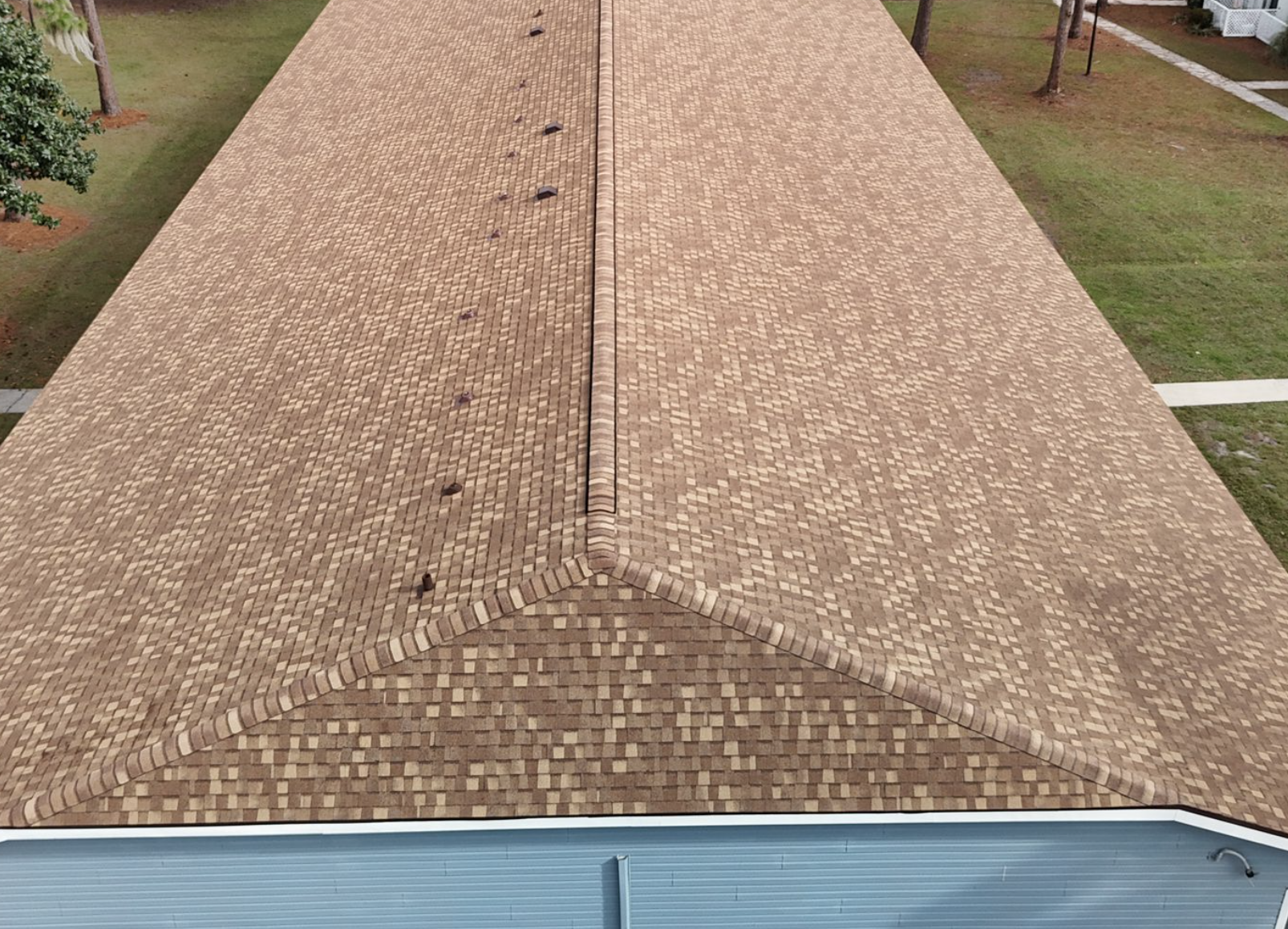
Material Selection: Clay, Concrete, or Slate?
Choosing the right material is the foundation of your project. Each has its own personality and technical requirements:
- Clay Tiles: These are the “gold standard.” Clay roofs can be traced back as far as 10,000 BC! In America, slate tile roofs were being used as far back as the 1600s, but clay remains a Florida favorite because its color is “baked in” and won’t fade under our intense UV rays.
- Concrete Tiles: Developed in the mid-19th century in Bavaria, these are made from a mix of cement, sand, and water. They are often more affordable than clay and come in an incredible variety of shapes that can mimic wood shakes or even slate.
- Slate Tiles: If you want a roof that lasts a century, slate is the answer. However, it is extremely heavy and requires a very sturdy home structure.
- Composite/Synthetic Tiles: These modern alternatives offer the look of slate or clay but at a much lighter weight, which can save you money on structural reinforcements.
For more help deciding, check out our guide on Choosing the Right Roofing Material.
Structural and Weight Considerations
We cannot stress this enough: tiles are heavy. While a standard asphalt shingle roof might weigh 275 to 425 pounds per square (100 square feet), a concrete tile roof can weigh 700 pounds, and clay can soar up to 2,000 pounds!
Before we start a residential tile roof replacement, we must ensure your home’s “bones” can handle the load. If you are switching from shingles to tile, we often need to bring in a structural engineer to verify that your rafters and trusses are up to the task.
| Material | Weight (per 100 sq. ft.) | Average Lifespan | Primary Benefit |
|---|---|---|---|
| Concrete Tile | 700 – 1,100 lbs | 50+ Years | Cost-effective & Versatile |
| Clay Tile | 600 – 2,000 lbs | 100+ Years | Color Longevity & Heritage |
| Slate Tile | 800 – 1,500 lbs | 75 – 150 Years | Natural Beauty & Durability |
| Composite | 200 – 400 lbs | 50 Years | Lightweight & Easy Install |
Identifying Signs for a Residential Tile Roof Replacement
How do you know it’s actually time to pull the trigger on a replacement? Most homeowners wait until they see a puddle on the floor, but the signs usually appear much earlier.
- Cracked or Slipped Tiles: One or two broken tiles from a stray branch can be repaired. However, if you see widespread cracking or tiles sliding out of place, the fastening system is likely failing.
- The “20-Year Underlayment Rule”: This is the most common issue we see in Florida. Your tiles might look perfect, but the waterproof underlayment beneath them usually only lasts 20 to 25 years. If your roof is approaching its 20th birthday, it’s time for a professional set of eyes.
- Visible Sagging: This is a serious red flag. It indicates either structural weakness or that the decking beneath the tiles has rotted due to long-term, slow leaks.
- Granule Loss: If you see heavy deposits of sand-like material in your gutters, your concrete tiles may be eroding.
Don’t wait for a disaster; learn more about the Key Indicators It’s Time for a Roof Replacement.
Cost Factors and Budgeting for Your Project
While we don’t give “one-size-fits-all” prices, we want you to understand what goes into your estimate. Labor actually makes up about 70% of the cost of a tile roof project because it is so physically demanding and requires specialized skill.
- Roof Complexity: A simple “up and over” roof is cheaper than one with multiple valleys, dormers, and a steep pitch.
- Permit Fees: Every county from Orange to Duval requires permits for a full replacement.
- Debris Disposal: Tiles are heavy and expensive to haul away and recycle.
- Contingency Fund: We always recommend homeowners set aside a “just in case” fund of 10-20%. Why? Because we can’t see the condition of your wood deck until we peel back the old tiles. If there’s rot, it needs to be fixed right then and there.
Whether you need an Orlando FL Roof Replacement or a project in Jacksonville, we believe in total transparency during the bidding process.
The Step-by-Step Execution of a Tile Roof Project
Once the planning is done and the permits are in hand, the real work begins. A residential tile roof replacement isn’t a weekend DIY project; it’s a carefully choreographed construction event.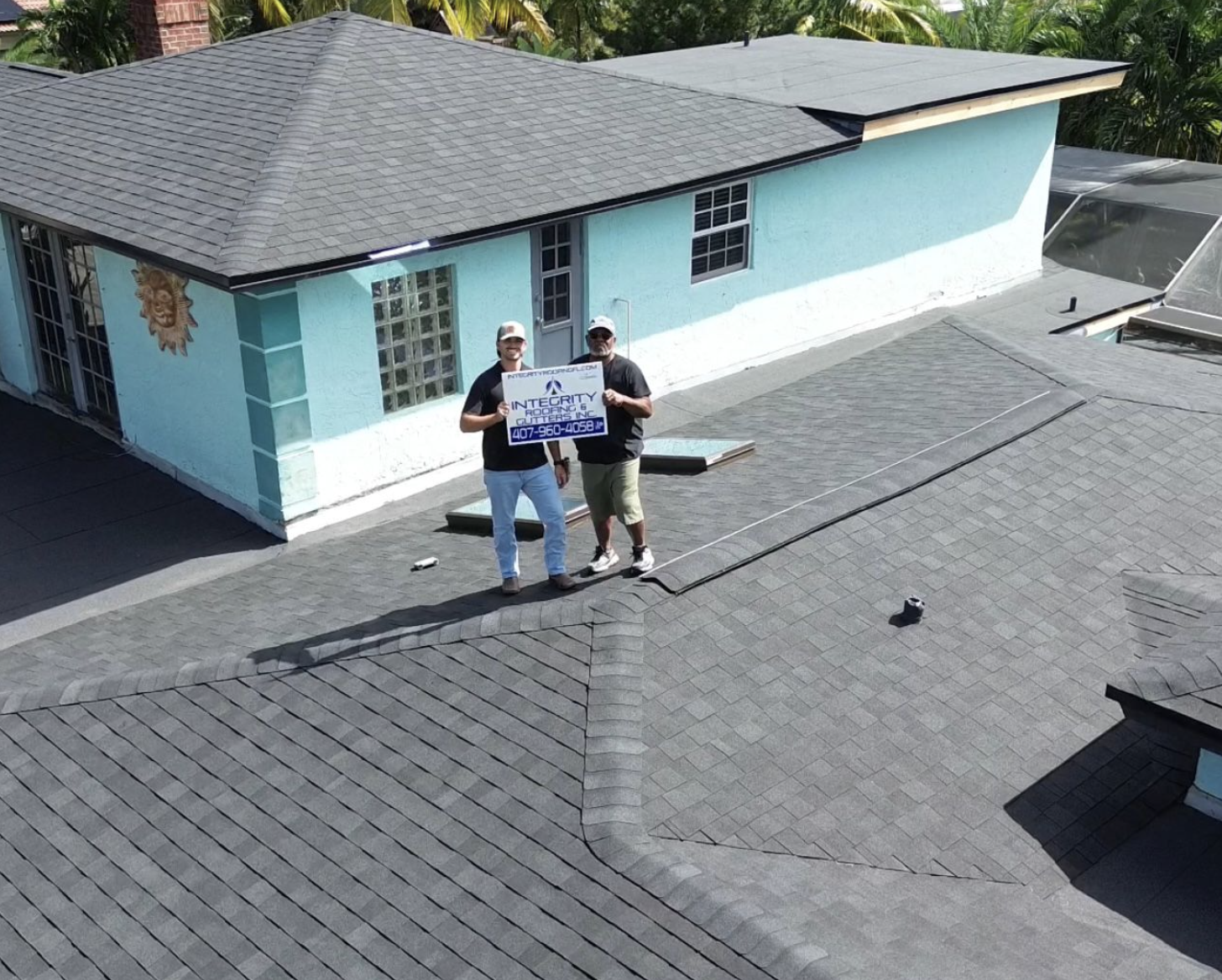
The Tear-Off and Inspection
We start by removing the old tiles row by row. This is a messy, loud process, but we take great care to protect your landscaping and driveway. Once the deck is bare, we perform a “surgical” inspection. We look for soft spots in the plywood, rusted nails, and signs of mold.
It’s interesting to note that while concrete roof tiles were a 19th-century invention, the way we install them today is much more advanced. In the past, tiles were often just laid over felt paper. Today, we use far superior materials to ensure your home stays dry.
For residents needing Roofing Services Orange County FL, we ensure every square inch of that deck is solid before moving forward.
Preparing the Structure and Underlayment
The underlayment is the true “roof” — the tiles are actually a decorative UV shield that protects the underlayment. In Florida’s humid climate, we typically recommend a high-quality, self-adhered (peel-and-stick) secondary water barrier. This material seals around every nail penetration, providing an extra layer of protection during hurricane-force winds.
- Rotted Wood Replacement: Any compromised plywood is swapped out for fresh, CDX-grade material.
- Drip Edge Installation: New, corrosion-resistant metal drip edges are installed along the eaves to keep water from wicking into your fascia boards.
- Flashings: We replace all lead or galvanized flashings around chimneys and vents.
If you are looking for a Jacksonville FL Roof Replacement, this stage is critical due to the salt air and coastal wind speeds.
Professional Installation of New Roof Tiles
Now comes the part that changes the look of your home forever. We install “battens” — strips of wood or plastic that the tiles hook onto. This creates an air gap between the tile and the deck, which is key for energy efficiency.
- Alignment: We use chalk lines to ensure every row is perfectly straight.
- Hurricane Clips: In Florida, we use specialized clips or screws to “lock” the tiles down. This prevents them from lifting during high winds.
- Ridge Caps: The peaks of your roof are finished with ridge tiles, often set in a bed of mortar for a “boosted” look that adds depth and character.
- Final Inspection: We walk the entire roof to ensure no tiles were cracked during installation and that all seals are watertight.
If you ever have minor damage later on, we also offer Orlando FL Roof Repair to keep your new system in top shape.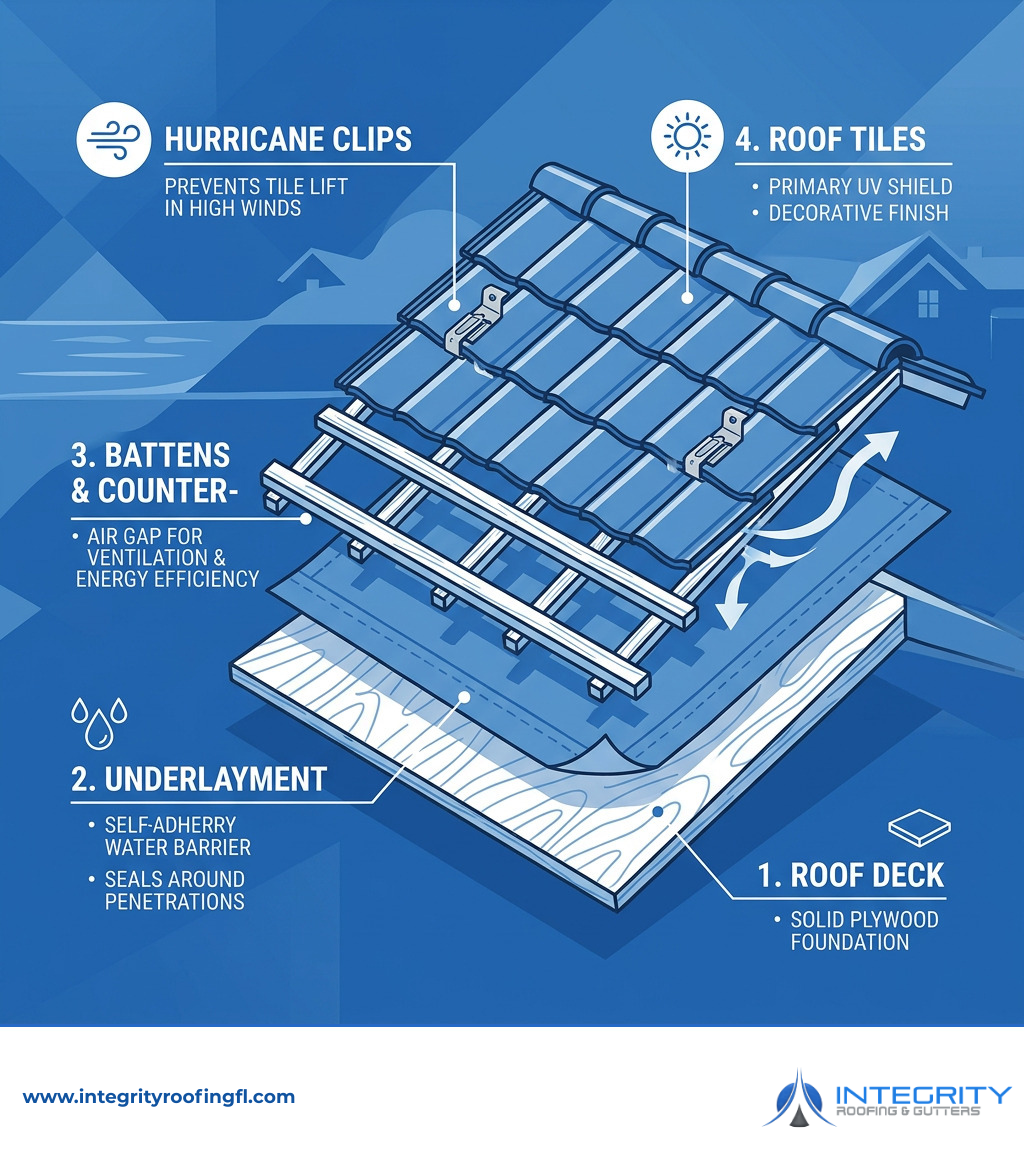
Regional Considerations for Residential Tile Roof Replacement
Florida is a unique environment for roofing. What works in Ohio won’t last five years in New Smyrna Beach.
- High-Velocity Hurricane Zones (HVHZ): Areas like Broward County have some of the strictest building codes in the world. We ensure your residential tile roof replacement meets or exceeds these local standards.
- Salt Air Corrosion: If you live within 3,000 feet of the ocean (like in Jacksonville Beach or Ponce Inlet), we use stainless steel or copper fasteners to prevent the “rust-out” that destroys standard nails.
- Wind Mitigation: A new tile roof often qualifies you for significant discounts on your homeowner’s insurance. We provide the necessary documentation to help you lower those premiums.
Our teams are experts in Roofing Services Seminole County FL and understand the specific local nuances of every community we serve.
Maintenance and Long-Term Investment Value
Once your new roof is installed, you want it to last. While tile is “low maintenance,” it is not “no maintenance.”
- Annual Inspections: Have a professional look at the roof once a year, especially after a major storm. Small cracks can be filled before they become leaks.
- Debris Removal: Don’t let leaves and pine needles sit in the valleys of your roof. They trap moisture and can cause the underlayment to rot prematurely.
- Gutter Cleaning: Keep those gutters clear! If water backs up under the eave tiles, it will rot your roof deck.
- Avoid Pressure Washing: High pressure can strip the finish off concrete tiles or break the delicate edges of clay tiles. Use a soft-wash system if you need to remove algae.
At Integrity Roofing, we believe a residential tile roof replacement is one of the smartest investments you can make. It boosts your home’s resale value, slashes your cooling costs, and provides a level of fire and wind protection that shingles simply cannot match.
We serve a wide range of locations, from the historic streets of Winter Park to the coastal homes of Port St. Lucie and the growing communities in Lake County. Our commitment to honesty and quality workmanship means we don’t just want to give you a roof; we want to give you peace of mind for the next fifty years.
Ready to upgrade your home’s protection? Schedule your professional residential tile roof replacement today and experience the Integrity Roofing difference. We encourage you to get multiple estimates because we are confident that our transparency and expertise will stand out.




Get Started With Your Roofing Project Today!

Ready to experience the difference that integrity makes? Contact us today for a free, no-obligation estimate. Let’s build a secure future for your home, together.